Every Message You've Ever Sent on Discord or Slack Lives Somewhere — Even the Ones You Deleted
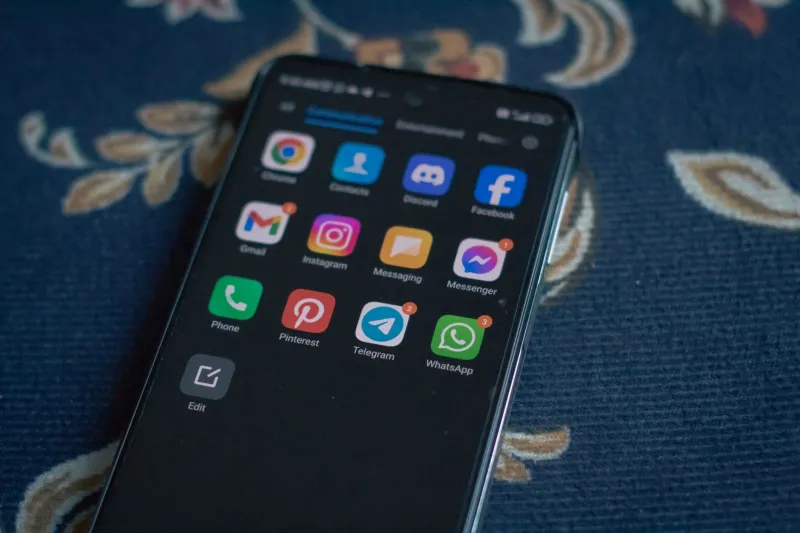
You typed something in a Discord server at 2am three years ago. Maybe it was a hot take about a video game. Maybe it was something more personal — a rant about your job, a confession to a friend, an argument that got heated. You deleted it the next morning. Gone, right?
Not necessarily. And depending on which platform you were using and what their data infrastructure looked like at that moment, that message might still exist in a form you can't access or control.
This is the part of messaging platforms that the onboarding screens don't cover.
What "Deleted" Actually Means on These Platforms
When you delete a message on Discord, Slack, or most gaming chat platforms, what you're actually doing is removing it from the visible interface. The underlying question — whether the data is purged from the company's servers, backups, and logs — is a different matter entirely, and the answer varies significantly by platform.
Discord states in its privacy policy that it retains message content for as long as the account is active or as needed to provide services. Deleted messages are removed from the user-facing interface, but Discord's documentation is vague about how quickly those deletions propagate through its backend systems, including backups and content moderation logs. Discord also retains metadata — who messaged whom, when, from what IP address — for longer periods tied to safety and legal compliance obligations.
Slack has more granular retention controls, but they're primarily designed for enterprise administrators, not individual users. On the free tier, message history is limited to 90 days of searchable content — but that's a display limit, not a deletion guarantee. Paid workspaces can configure custom retention policies, and Slack's own infrastructure retains data according to its internal backup schedules, which aren't fully disclosed.
Gaming platforms like Xbox Live messaging, PlayStation Network chat, and in-game communication systems are generally the least transparent of all. Microsoft and Sony both retain message content for undefined periods for "safety and moderation" purposes, which is a broad enough category to cover almost anything.
The AI Training Question Nobody Is Asking
Here's where things get more pointed for 2024 and beyond.
Multiple major platforms have updated their terms of service in the past two years to include language about using user-generated content to train AI models or improve machine learning systems. Discord updated its terms in 2023 to include provisions that allow it to use content for service improvement — language broad enough to potentially include message content in AI training pipelines.
Slack faced significant backlash in mid-2023 when users noticed its privacy policy allowed it to use customer data to train AI models. The company subsequently clarified that it would not use customer data to train third-party AI models without explicit consent — but the fact that the policy had to be clarified tells you something about the default assumptions.
The pattern here is consistent: platforms draft permissive terms, users don't read them, backlash eventually surfaces, the company issues a clarification that technically narrows the policy while leaving significant latitude intact.
What Each Platform Actually Collects
Beyond message content, here's a breakdown of the data these platforms gather through normal use:
| Platform | Message Content | Metadata | Voice/Video | AI Training Opt-Out |
|---|---|---|---|---|
| Discord | Retained (duration unclear) | Yes, including IP logs | Not recorded (per policy) | Limited, buried in settings |
| Slack | Workspace-controlled | Yes, extensively | Call metadata only | Enterprise tier only |
| Xbox Live | Retained for moderation | Yes | Clip/recording features | No clear opt-out |
| PlayStation Network | Retained for moderation | Yes | No | No clear opt-out |
| Steam Chat | Retained (vague policy) | Yes | No recording | No disclosed mechanism |
Metadata deserves special attention here because it's often more revealing than content. Knowing that you messaged a specific person 47 times in a week, primarily between midnight and 3am, from a specific location — that's a behavioral profile that doesn't require reading a single word of what you wrote.
Content Moderation and the Law Enforcement Door
Every platform that retains message data is also a potential source for law enforcement requests. Discord, Slack, Microsoft, and Sony all publish transparency reports detailing how many government requests they receive for user data and how often they comply.
Discord received over 5,000 legal requests in the first half of 2023 alone, complying with the majority. The platform retains IP address logs, device identifiers, and message content specifically to be able to respond to these requests.
This isn't inherently sinister — platforms have legitimate obligations to respond to valid legal process. But it means the assumption that private messages are truly private is worth examining carefully, especially in communities that discuss sensitive topics.
Privacy Settings That Actually Do Something
Not every privacy toggle is theater. Here are the ones worth configuring on each platform:
Discord:
- Settings > Privacy & Safety > turn off "Use data to improve Discord" and "Use data to customize my Discord experience"
- Settings > Privacy & Safety > disable direct messages from server members you don't know
- Settings > Authorized Apps — audit and revoke any third-party bots or applications that have been granted access to your account
- Consider using Discord's data export tool (Settings > Privacy & Safety > Request all of my Data) to see exactly what they have on file
Slack:
- Individual users have limited control on free workspaces — the admin controls the retention policy
- If you're a workspace admin: Settings > Retention & Deletion allows you to set message deletion timelines
- Review connected apps under Settings > Installed Apps and remove anything unused
- For sensitive conversations, consider that Slack is fundamentally a workplace tool with employer-level access built in by design
Xbox/PlayStation:
- Both platforms allow you to restrict who can send you messages in privacy settings
- Neither offers meaningful control over how long the platform retains message content
- Avoid sending genuinely sensitive information through these systems
The Bigger Picture
There's a reasonable argument that some data retention is necessary and even beneficial — platforms need message history to investigate harassment, enforce community guidelines, and respond to legal requirements. Nobody wants a moderation-free zone.
But the current arrangement asks users to trust that this retained data will only ever be used for those stated purposes, by the current ownership of the platform, under current laws, indefinitely into the future. That's a lot of trust to extend to companies whose primary incentive is engagement and monetization.
Discord, notably, has explored monetization models that could involve advertising — which would create the same data-as-product dynamic that governs social media platforms. The data it has accumulated about hundreds of millions of users would be central to that model.
The YapIt Bottom Line
Treat every message you send on these platforms as semi-permanent and potentially visible to the company, its employees, law enforcement with a valid request, and future owners of the platform's data assets.
For casual gaming chat and server banter, that's probably fine. For anything you'd want to keep genuinely private — use a platform built around that principle, like Signal, where end-to-end encryption means the company literally cannot read your messages even if it wanted to.
Knowing the difference between a messaging app and a private communication tool is one of the more useful distinctions you can make in your digital life right now.